Planetary boundaries
Different approaches to their evaluation and their consideration in the green transition
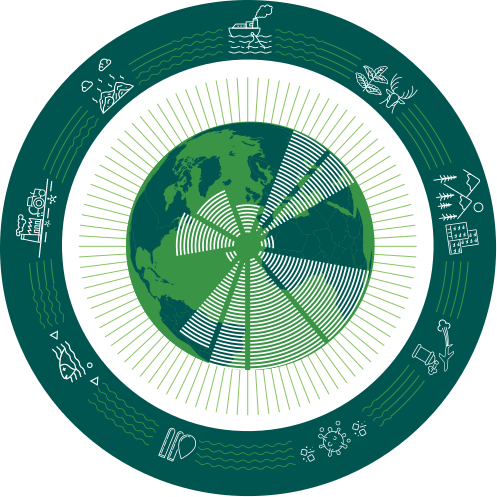
The European Union, within the framework of the Eighth Environmental Action Programme, has set ambitious goals for sustainable development by 2030, including achieving climate neutrality, sustainable growth, and a zero-waste economy. The concept of planetary boundaries, which defines the limits for key processes in the Earth system to prevent unacceptable global environmental changes, plays an important role in this. Despite some positive progress, results indicate a serious environmental crisis, as six out of nine boundaries have already been exceeded. Although Slovenia exceeds some planetary boundaries, it still ranks better compared to the EU average. For a successful transition to a more sustainable future, holistic thinking, innovation, and effective measures that address both environmental and socio-economic challenges are necessary.
The Age of the Anthropocene, the Concept of Planetary Boundaries, and Earth for All
More
A brief overview of the original concept of planetary boundaries and its advancements
More
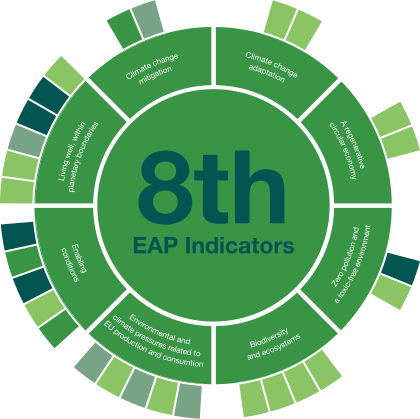
Is Europe living within the limits of our planet?
More
"Doughnut" economy: measuring progress with a doughnut
More
Ecological footprint as an indicator of biological regenerative capacity, consumption, and well-being in relation to selected planetary boundaries
More
Well-being economy
More
Key measures for food and energy transformation and reduction of ecological debt: solutions and opportunities
More
Ecological footprint of Slovenia and measures for its reduction
More
Yes
Maybe
Maybe not
No
It is unclear
8th Environmental Action Programme (8th EAP)
Article 2, Paragraph 1 / Long-term Priority Goal
By no later than 2050, taking into account the limitations of our planet, people will live well within a well-being economy where nothing is wasted, growth is renewable, climate neutrality is achieved in the European Union, and inequality among people is significantly reduced. A healthy environment is the foundation of well-being for all people. In a healthy environment, biodiversity is preserved, ecosystems thrive, and nature is protected and restored, thereby increasing resilience to climate change, weather-related natural disasters, and other environmental risks. The European Union, in accordance with intergenerational responsibility, sets the pace for ensuring the well-being of present and future generations worldwide.
Planetary boundaries
Discover various approaches to evaluating planetary boundaries and their consideration in the green transition.
The informational material includes detailed explanations of research approaches, analyses, and graphical representations.