Doughnut Economy: measuring progress with a doughnut
The concept of Doughnut Economy
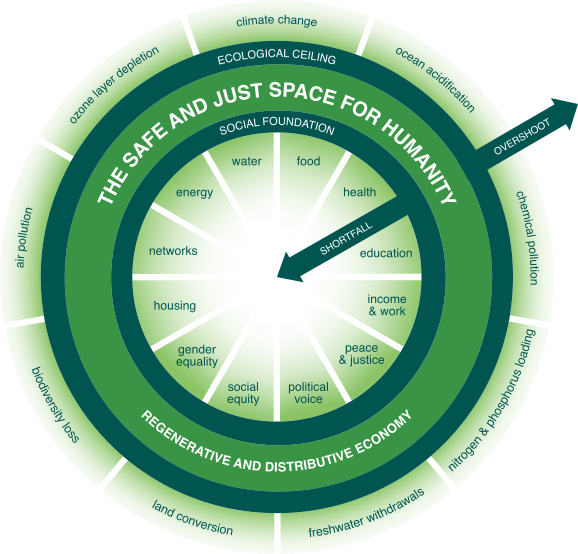
Drawing on insights from different schools of economics – including ecological, feminist, institutional, behavioural and complexity economics – the economics of the ring doughnut offers seven key approaches to guide the thinking of contemporary economists in the 21st century. These approaches are transforming economies at all levels, from the local to the global.
Empirical research based on the ring doughnut concept
- limiting excessive wealth and consumption by the rich and
- preventing extreme scarcity among the least well-off.
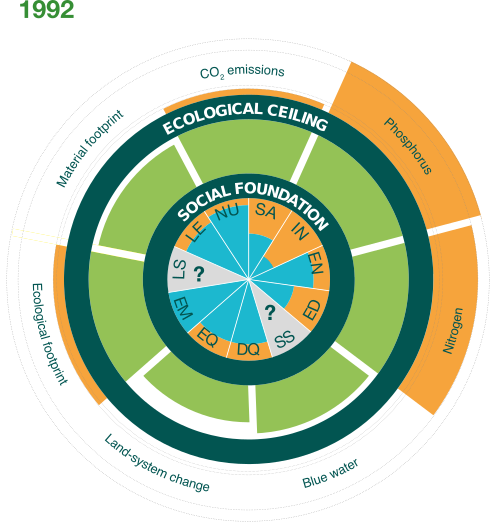
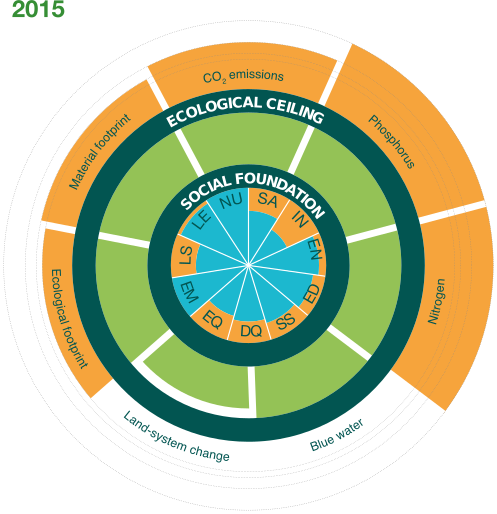
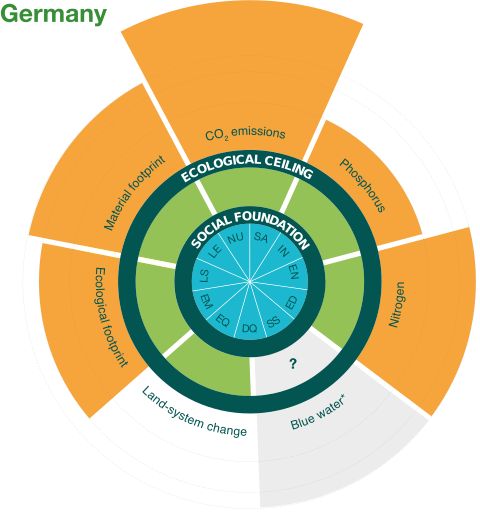
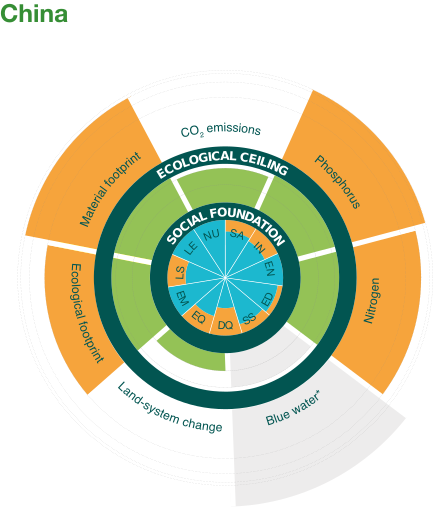
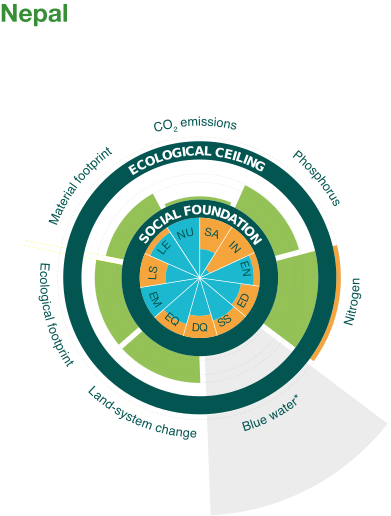
A better understanding of countries’ trajectories on the ring doughnut can provide insights into the necessary actions to transform unsustainable systems. Empirical research combining social and biophysical indicators within the ring doughnut framework is advancing, and this framework is already being used to assess the performance of cities, regions, countries and the world.
- ecological ceiling and social foundation comprising a doughnut of social and planetary boundaries
- overall consumption of resources with regard to each of the global biophysical boundaries, beginning at the outer edge of social foundations
- average social performance with regard to each of the social foundations, weighted by population number
- shortfall below the social foundation of transgressing the biophysical barriers
- indicator with incomplete data
Legend
- LS   Life Satisfaction
- LE   Life Expectancy
- NU   Nutrition
- SA   Sanitation
- IN   Income Poverty
- EN   Access to Energy
- ED   Education
- SS   Social Support
- DQ   Democratic Quality
- EQ   Equality
- EM   Employment
*Blue water is water found in rivers, lakes and groundwater and used for drinking, irrigation and industrial purposes.
- ecological ceiling and social foundation comprising a doughnut of social and planetary boundaries
- overall consumption of resources with regard to each of the global biophysical boundaries, beginning at the outer edge of social foundations
- average social performance with regard to each of the social foundations, weighted by population number
- shortfall below the social foundation of transgressing the biophysical barriers
- indicator with incomplete data
Legend
- LS   Life Satisfaction
- LE   Life Expectancy
- NU   Nutrition
- SA   Sanitation
- IN   Income Poverty
- EN   Access to Energy
- ED   Education
- SS   Social Support
- DQ   Democratic Quality
- EQ   Equality
- EM   Employment
*Blue water is water found in rivers, lakes and groundwater and used for drinking, irrigation and industrial purposes.
High-performing regions often use resources in an unsustainable way, while low-performing regions do not achieve a sufficient social base. Globally, billions of people live in countries that fall below most social thresholds, while humanity exceeds six of the seven global biophysical limits.
Doughnut Economy: New economic paradigm
Seven ways to think like a 21st century economist
Seven Ways to Think
From 20th-Century Economics
To 21st-Century Economics
1.
Change the goal
From 20th-Century Economics
GDP
To 21st-Century Economics
the Doughnut
2.
See the Big Picture
From 20th-Century Economics
Self-contained market
To 21st-Century Economics
Embedded economy
3.
Nurture Human Nature
From 20th-Century Economics
Rational economic mac
To 21st-Century Economics
Social adaptable humans
4.
Get Savvy with Systems
From 20th-Century Economics
Mechanical equilibrium
To 21st-Century Economics
Dynamic complexity
5.
Design to Distribute
From 20th-Century Economics
Growth will even it up again
To 21st-Century Economics
Distributive by design
6.
Create to Regenerate
From 20th-Century Economics
Growth will even it up again
To 21st-Century Economics
Regenerative by design
7.
Be Agnostic about Growth*
From 20th-Century Economics
Growth addicted
To 21st-Century Economics
Agnostic Growth
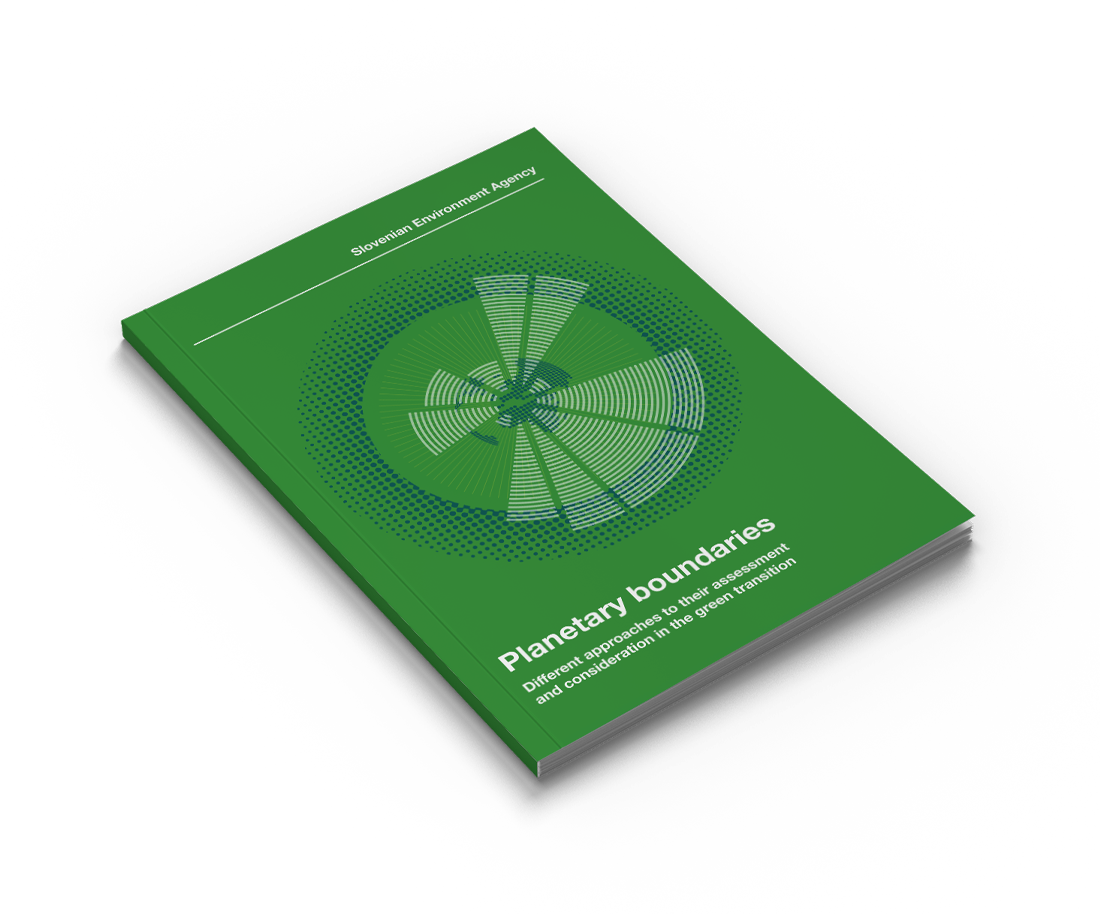
Planetary boundaries
The informational material includes detailed explanations of research approaches, analyses, and graphical representations.